Since then, many industrial equipment owners, especially in manufacturing factories, have been looking for ways to upgrade their existing equipment to harness the power of modern IIoT and implement Industry 4.0. Ideally, this upgrade solution should be low-cost and cause minimal disruption to the industrial processes. Industrial revolutions from 1.0 to 4.0 Rigo IoT’s X300 edge computing AI box fits this description, but more on that later. Let’s first look at the benefits of upgrading industrial equipment.
Benefits of Upgrade or Modernize Industrial Equipment To Eliminate Unplanned Downtimes
Old and unreliable machinery can break down at any time, resulting in unplanned outages that interrupt manufacturing and reduce productivity. Upgrading or retrofitting these equipment eliminates these unplanned interruptions, and the best way to go about it is to use modern, tried-and-tested technology. The upgrade might seem expensive, but it is cheaper than the costs associated with downtime and replacing the old with the new. To Improve Performance and Efficiency The entire IoT manufacturing process in modern factories is interconnected to the point where any delay in one sector can cause delays in the entire production. Old and outdated machines tend to operate at lower efficiencies, which can slow down the whole plant and magnify the inefficiencies. Updating the equipment restores the required efficiency, which maximizes productivity and cuts the production costs per item. To Increase Production Time Minimal downtime combined with better performance and efficiency automatically increases production time. Additionally, the new machinery can have simpler HMI user interfaces with more features that enable automation or fewer workers to handle more tasks. An HMI user interface To Enhance Product Quality Upgrading to the latest machinery has a positive effect on product quality, especially in segments where high precision, fine tolerances, and high standards are required. This benefit is critical because it keeps companies ahead of the competition and enables them to access new markets with stringent quality standards. To Improve Workplace Safety New equipment usually features more fail-safe mechanisms that improve worker safety by reducing hazards and potentially eliminating workplace injuries. To Improve Sustainability The efficiency provided by modern machines helps to reduce energy consumption and material wastage, which indirectly reduces harmful gas emissions. This benefit also helps reduce production costs (energy and materials), making it possible to lower prices and remain competitive. To Make Access To Support and Repair Parts Easier Machine and equipment manufacturers usually provide support and repair parts for each version for a specific period. Therefore, hanging on to old machines can be costly because they break down often, and finding parts or technical support will be challenging to bring them back to life. Some equipment manufacturers might have even gone out of business, so getting repair parts will be impossible. To Maximize ROI Modern machines and equipment enable companies to recoup their investments faster by improving productivity, reducing maintenance costs, and cutting production costs, especially those associated with energy consumption. Read Cases: Multiple Zigbee Gateway for Energy Management Introducing Rigo IoT’s X300 Edge Computing AI Box for Industrial Equipment Upgrade I had mentioned X300 smart edge computing AI box earlier, this box makes it possible to modernize factory machinery to achieve Industry 4.0 cheaply in four ways. We offer powerful custom services to help you build these automation tools.
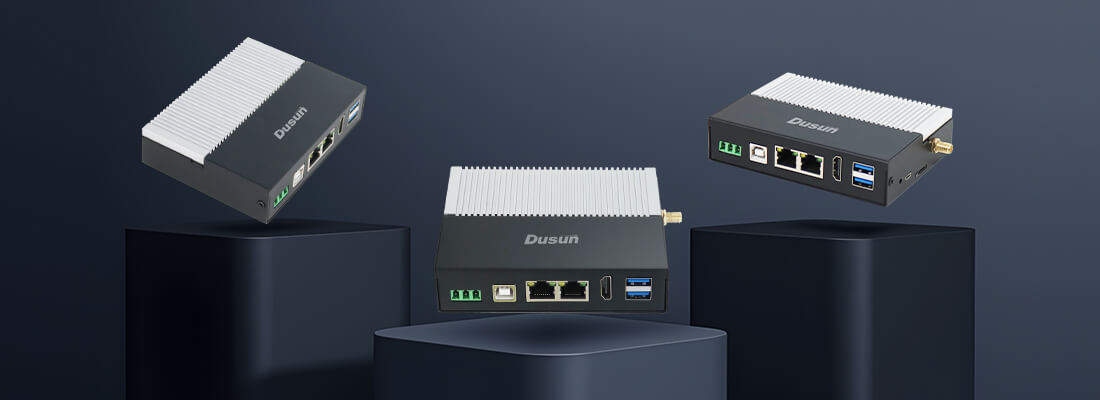
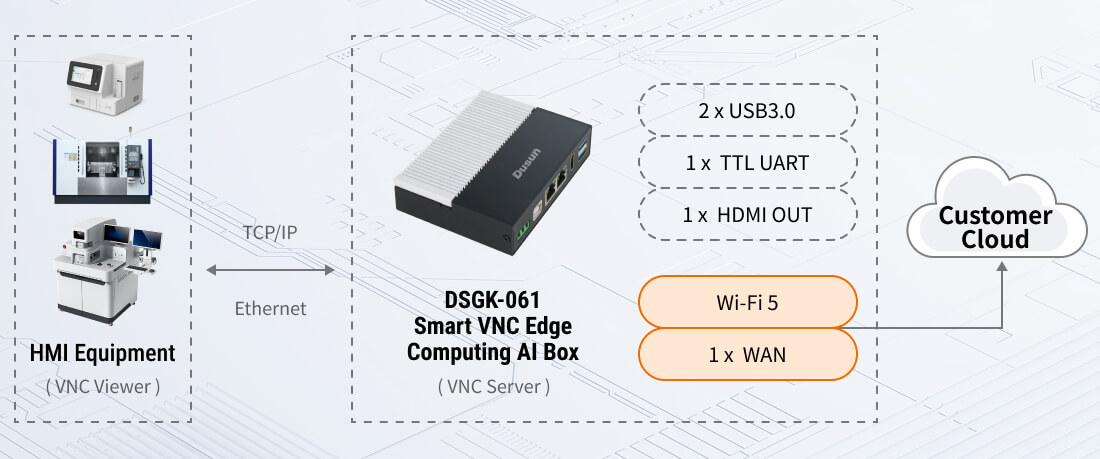
Enabling Remote Access, Operation and Management Speaking of HMI, this smart box features VNC remote access and supports TCP/IP to upgrade existing traditional HMIs by providing remote access. Usually, traditional HMIs are located on-site and don’t allow remote access. But the DSGK-061 sits behind them in the architecture to act as a VNC server. This leaves the HMI to be a VNC viewer. On the other side are protocols like Modbus and TCP/IP to interface with the machines, sensors, PLCs, and RTUs, so the box converts protocols when providing remote control. This setup enables factory workers and other users to remotely access, configure, maintain, monitor, and control industrial equipment, including traditional screenless machines, using devices like phones and laptops. Remote control is convenient because it allows technicians to keep tabs on industrial processes even after clocking out or when on other assignments.
Allowing Secondary Development Traditional HMIs are often closed, with limited openness to make secondary development for more features. But this smart edge computing box changes that because it allows secondary development. RigoIoT provides rich development resources, including MQTT protocol support, open-source SDKs, and SAE assistance to solve app development technical challenges. With the apps up and running, users can use the local monitor or VNC viewers (via Wi-Fi or WAN) to access these additional tools to monitor, control, or run the entire factory more efficiently. Providing Lightweight AI Power for Local Edge Computing The EC900 provides local edge computing power for automation and other tasks because it runs on a quad-core Cortex A55 CPU and has up to 4GB RAM with 16GB eMMC. This chip has an integrated 1 TOPS NPU .
How to Upgrade Industrial Equipment? Step-by-step Tutorial Step 1: Assess Your Equipment Needs Before upgrading industrial equipment, assess the machine’s requirements that will enable it to achieve maximum efficiency. This will help to identify gaps or room for improvement. You can carry out this assessment by: Doing an equipment inventory Checking the machine’s specifications Analyzing the equipment’s condition Checking the equipment’s usage You can get some of this data from the quality, production, and maintenance records, then prioritize the equipment needs based on importance and cost. Step 2: Implement Preventive Maintenance Preventive maintenance helps to reduce downtime, wastage, and inefficiencies while increasing product quality and extending the equipment’s lifespan. For effective preventive maintenance, develop schedules and checklists for every machine, train technicians to perform this maintenance, follow the procedures consistently, and document the results. Step 3: Upgrade Your Equipment Strategically This process must be handled strategically because it can be costly, risky, and disruptive. Consider the cost-benefit analysis, ROI, training requirements, compatibility issues, and other factors to ensure a smooth upgrade. Step 4: Monitor and Evaluate Your Equipment Performance For starters, you must have indicators, metrics, and benchmarks to compare your data for evaluation. With this in place, monitor and collect data from the equipment using sensors and meters, then use software to store and analyze this data. Check for improvements after the maintenance and upgrades, and adjust the parameters accordingly to achieve optimum efficiency. Step 5: Seek Expert Advice and Support The insights derived from the analyzed sensor data should help you make better-informed decisions. However, you should seek expert advice and support to gain new insights, perspectives, and solutions for the equipment’s challenges and needs. These experts should include reputable persons, such as consultants, equipment suppliers, researchers, or industry association members. Remember to convey your needs and expectations clearly to them for fruitful collaborations. Step 6: Involve and Empower Your Staff Employees should be part of the maintenance and upgrading process to adopt the new system as early as possible. So encourage them to share their ideas, concerns, and suggestions to help make critical decisions and solve challenges during the process. Involving and empowering them can also boost their morale, retention, and motivation, and you can leverage their knowledge, skills, and feedback to improve the equipment’s quality and performance. Final Words Modernizing and upgrading industrial equipment might seem like a simple thing to do on paper, but the actual implementation requires skill and precision. This upgrade is necessary if you want to leverage the power of Industry 4.0, and RigoIoT’s EC900 smart edge computing AI box makes the process much easier and cheaper because this small device can do a lot. However, ensure you follow the steps above during this process to make it more effective, and our team is available to provide expert advice and support to make the solution implementation as seamless and beneficial as possible. That’s it for this article. You can learn more about this smart box here to understand its full features and capabilities.